 |
| Two tectonic plates stuck together. |
Tectonic plates move a few centimeters per year. If they become stuck on each other, pressure begins to build. The longer the plates are stuck together, the more pressure that is built up.
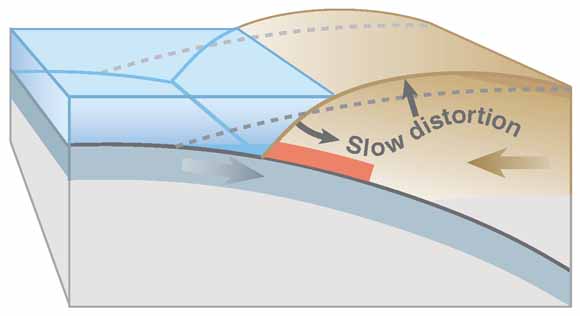
Slowly the overriding plate bulges upwards, causing a rise in sea levels. Much like settling down into a tub. As you lower your body into it, the water level rises.
 When the area where the two plates are stuck break apart and begin moving, the plates move suddenly and violently. The longer the plates have been stuck, the more violent the earthquake is. The sudden movement disturbs the water level, causing a series of waves that become Tsunamis. You can see a small example of this by quickly rising out of a bathtub and observing the violent reactions of the water.
 |
| Like the water in a bathtub when you quickly get out, the Tsunami spreads out to all sides. |
